

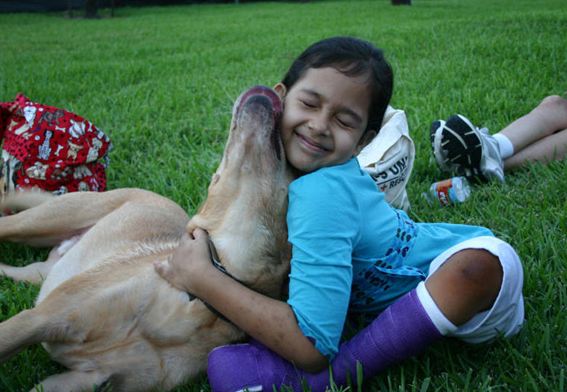
Animal Assisted Pet Therapy Dogs, Therapy Dogs for short, are becoming more and more popular. The program has been around for many decades in the United States, officially and unofficially. In more recent years, schools and health industries started recognizing the benefits of having well-mannered dogs in their facilities; controlling the blood pressure, increasing oxytocin level, improving children’s reading skills etc. (Read an article) Before any of these scientific researches were released, we all knew that dogs made us feel good. Dogs make you laugh, dogs make you forget about the bad day you had, and dogs make you feel special no matter how you look. Imagine having that when you are lying all alone on a hospital bed. What a great gift to share.
I have helped evaluate and train many dogs to becoming a therapy dog. I have two of my own that are registered with

Therapy Dog Inc and READ Program. About half of the time I have to give the owners the “bad news” after an evaluation. Many dog owners bring their dogs to me because their dogs are sweet, affectionate and so stinking cute. :) Those are all great qualities but I have to explain to them that there is more to this “job”. The dogs must be sweet, affectionate, comfortable AND confident in strange environment and with strangers. If a dog is unsure of new people and new places, he is not going to enjoy the “job”. Pet therapy is not only about making others happy, but also about making your dog happy during the visit. It’s not fair to put your dog through it if he’s not having fun. So, here are some of the qualities I personally look for.
- Very comfortable with all types of people, including men, little kids, big kids, people in big hats, wheel chair, men with beard, etc.
- People oriented. Neutral and calm around other dogs.
- Confident and comfortable with loud noises, unusual objects, smells, movements, and environment. Think of big baloons, big vacuum, elevators, and strong smells of cheicals.
- Loves physical affection. Tolerant of being hugged and squeezed. Note: Most dogs do not love being hugged but some dogs tolerate. (It is your job to monitor all interactions and your dog’s body language.)
- Good impulse control and good manners – no jumping, pulling, barking, stealing food, marking etc. High energy is OK as long as it can be controlled.
- Handler who can read dog’s body language and knows when to help the dog.
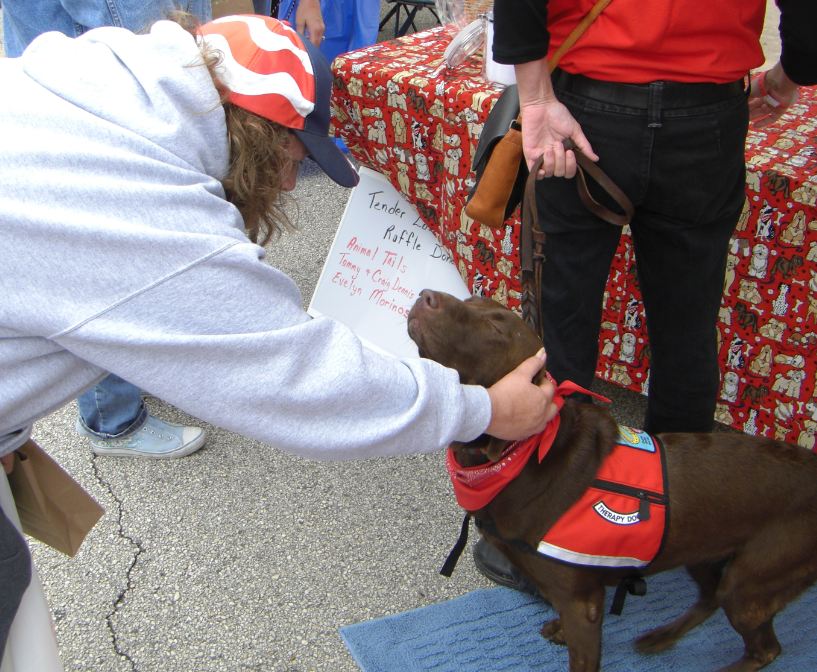
In most cases, your dog pass the temperament evaluation, then he will learn the good manners and impulse control. (Some dogs are natural and does not need much training) Walking on a loose leash, ignoring food and other dogs, not jumping up, greet people happily but controlled. Teaching a trick or two always help making the visit more joyful. Here are some of the useful behaviors you can teach your therapy dogs.
Remember to get those behaviors really strong before trying to show them off in a strange environment, or you will get the “HUH?” look from your dog and ruin the moment!
Below is a list of major organizations in the United States. Each group has different rules, some stricter than others. I encourage you do your research before committing to one group.
 Bordernerd